|
As a warm-up, brain break or connection activity this is a fun site to add to your toolbox! Ian Byrd designed this quick and easy Random Emoji Generator writing prompter. Students can write about anything they like. When they run out of things to say, they can select "And Then..." and another random emoji will appear next to the first one to continue the story. This can go on for as long as the student likes. Consider having students do this in pairs or triads and then share out with your class. Pretty much the full range of emoji's can be generated, so your student might get a toilet or the poop emoji. You might want to address how those types of emojis might be referenced and incorporated before students get started.
12 Comments
As winter break comes to an end, for the 6th year in a row I have selected a word or words that I think will influence my life in the coming year. It’s a process I look forward to and dread at the same time, as it requires reflection and goal setting. Looking back over the years, the words that I have selected all have a place in my story and this year I think the same will be true. If 2020 has taught me anything it’s to ask why? The systems and patterns we follow on a daily basis exist because someone else decided to put them in place. As a kid, I went to school from 8 to 3 and as an adult, I have gone to work in a very similar pattern. Until I went to college there was very little choice in anything in my education. Why? Because those were the rules and it’s the way things have always been done. And that is the worst answer of all. In 2021, we have the chance to question the systems and patterns we are following and construct a life that is better. So my three words have been chosen in the hope of flourishing both personally and professionally while being a part of something exciting and meaningful. #My3Words Ideate (verb) Ideation is the creative process of generating, developing, and communicating new ideas, where an idea is understood as a basic element of thought that can be either visual, concrete, or abstract. Ideation comprises all stages of a thought cycle, from innovation, to development, to actualization. (Wikipedia) It all starts with an idea. I believe that bringing together smart divergent thinkers and working as a team is critical. Listening, questioning, and developing “what if” scenarios and then balancing them against each other to create something better for our daily lives and education system. In an interview with Roger Martin on the podcast “The Knowledge Project,” I was introduced to the concept of integrative thinking. The Rotman School of Management defines integrative thinking as: "...the ability to constructively face the tensions of opposing models, and instead of choosing one at the expense of the other, generating a creative resolution of the tension in the form of a new model that contains elements of the individual models, but is superior to each." There is something liberating and exciting about realizing that we may be able to impact what day to day life and learning looks like. This can be accomplished by looking at the model of school we currently have and being a part of creating a better experience. Move (noun), a change of place, position, or state. (Oxford Languages) In 2021, my school will be moving into a new building after over 6 and a half decades. It’s a project that has been in the works since 2012. The move will cause change and disruption. It will also be emotional. In my non-work life, I will be moving from one side of my house to the other, as we take on some renovation projects that have loomed over us since Hurricane Harvey. It’s time to finish what we started. Move (verb), make progress; develop in a particular manner or direction. It shouldn’t be hard to make progress in this area. 2020 was the year of the chair in so many regards. It just happened and I will have a focus and a goal each week to move physically. Enjoy (verb) take delight or pleasure in (an activity or occasion) Life is fragile and unpredictable. As we move through 2021, I want to have fun and celebrate change, milestones and small moments. Keeping things simple, not making assumptions, and valuing critical friends will all play a role in enjoying life this year. I have learned one other thing this year….these three words all are just not about me. I am blessed with a loving family and friends, my team at home, and also a professional learning and working community. I am counting on all of them to wallow in the weeds along with me and to see where these words may lead. The future is exciting and I think it’s important that we all realize we have a chance to help create better! A shout out to Chris Brogan for authoring the idea of "My Three Words" and to my friend Jennifer Hogan for being the conduit to the idea for me six years ago! I would love to know what your "word(s)" are or in what ways you have committed to focus on in 2021? My past #words
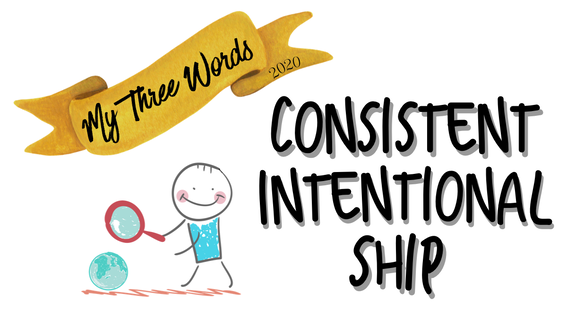
2020 - Consistent, Intentional, Ship 2019 - Arena, Moments, Faith 2018 - Create 2017 - Connect, Blend, Voice 2016 - Grow The pandemic has caused us to make many changes in our everyday life, causing businesses to re-think their business strategies to remain relevant and open during these challenging times. It’s no different for education. For centuries, “school” has remained consistent and almost unchanged overall. With people all over the world making and implementing new plans and new ways of doing things, we wanted to focus on the topic of assessment for this blog post. There are some hard questions that have been raised by educators about assessment:
Matt Enlow’s tweet on December 2 started a thread that gave insight into changes that teachers were making and although there is no one size fits all assessment solution, there are ways in which we can grow and assess better. Below are five ways we found that assessments and final exams might be given and adapted during COVID-19 and beyond.
2. Evidence of Mastery using Flipgrid. Example from Mike Mohammad (A secondary science teacher) Create a Slide Deck and have each slide with a standard or learning target that students can submit a flipgrid response to. Check out the Bingo Card he created for students and the Slide Deck with Instructions. Students are presenting evidence and it’s in short snippets. If they are recording something in Flipgrid, it’s specific and not drawn out. They hit their target and move on to show evidence on the next standard in another Flipgrid submission. Everything is linked in a slide deck which makes it organized and easy for the teacher to assess. To make assessing the Flipgrid responses quick and efficient, organize students as individual topics (now called groups) in flipgrid. Greg Kulowiec explains this hack here. 3. Final Exams or Epic Finales by Anthony Crider Could exam week become the best week of the year? Anthony Crider took the traditional exam and flipped it upside down to create a culminating experience at the end of the semester. After seeing a colleague tackle a final by asking one really good question, he set out to do the same thing. “It took me longer to come up with that one good question than it did to pick 100 questions for my introductory astronomy class. I also trimmed the question down to be as short as possible, requiring students to “unpack” it even before answering it. As one student wrote to me afterward, “I think I spent as much time figuring out what the question was asking as I did answering the question.” 4. A Google-Proof Assessment Developing an assessment that allows students to use their notes and the resources that are available to them on a daily basis. It is a question that can not be directly answered via Google because it requires analysis, interpretation, and application. The web will be a very helpful resource for students in collecting information related to these questions, but search engines will not lead to easy answers. Use Blooms Digital Taxonomy, adapted by Andrew Churches, to help craft questions that cause the learner to create, evaluate and analyze. Creating these questions will take time and practice. Get with your team and divide the learning targets that you’ll be accessing and use this template to help develop your questions. 5. ePortfolio - Collecting Evidence of Learning A portfolio allows the assessment to shift and have the learner own the assessment process. John Spencer has a great collection of resources to help establish a portfolio process to collect evidence of learning and has included steps to take while curating a portfolio during distance learning. What sets people apart from others in the 21st century is knowing what to do with the information that is available to them, not simply having the information. Developing the skills of curation, evaluation, synthesis, and application should be goals within any assessment.
How might the next assessment you develop look different? How would you lead teachers to re-think and change their assessments? Retrieval Practice is a powerful strategy that improves learning by pulling information out of students' heads. Allowing students to quickly connect learning in both a flexible and low stakes way has been shown to have a huge impact on long-term achievement. Learning is not about what you put into the brain but what you can retrieve and take out. Integrating retrieval practice into instruction offers student's the opportunity to transfer knowledge and apply it to what they already know. Two quick strategies to integrate Retrieval Practice into your virtual, hybrid or in person teaching environment are Brain Dumps and Two Things. 1. Brain Dumps At any point during a learning session, pause and ask students to write down everything they can remember about the topic you are learning about. Students are given a short period of time to write and just "dump" their thoughts. Click here to make a copy of my Brain Dump Form. It has a timer built into it, so the students can begin the activity on their own. 2. Two Things At any point in a learning session, ask students to write down two things in response to a specific prompt. Possible prompts include: What are two things you have learned so far today? What are two things you learned yesterday (or last week) that connect to today's learning? What are two takeaways from this unit thus far? What are two things that you might want to explore further? What are two things from your own life that relate to today's lesson? Click here to make a copy of my 2 Things form. You can edit your copy or use it as is. Consider integrating either of these strategies while also using "Think, Pair, Share", having the Brain Dump or 2 Things strategy be the "Think" stage in the process. 3. Retrieval Grid ChallengsThe Retrieval Practice Challenge Grid that Kate Jones created can be used at the start of a lesson with a range questions that require students to retrieve and recall information from last lesson, last week and even further back. An example of the Retrieval Practice Challenge Grid being used in math is shown by @MsJonesEdu. Templates to create your own Retrieval Challenge Grid were made available by Mark Anderson and can be accessed here. Leveraging the research of cognitive scientists like @PoojaAgarwal will boost the learning in any classroom. (Additional strategies can be found in Retrievalpractice.org guide "How to Use Retrieval Practices to Improve Learning") I have not read her book yet, Powerful Teaching, but it's on my list for winter break. If you have additional strategies that you have found to be effective, please share them below. My Bullet Journal Evolved - that's what I have to say about my Bullet Journal. In the beginning, they were called my "notebooks". I am on version 7 of what I now call my Bullet Journal. Each year I have tweaked how I set my journal up and utilize it. I look back at each year's book and cherish the memories, documentation and learning that I see as I read through the pages. Ryder Carol is the original creator of the Bullet Journal Method and his book is a solid resource. Five reasons why you should consider creating and using a Bullet Journal are:
I have a favorite when it comes to my physical Bullet Journal. I crack open a new Leuchtturhm 1917 every July. ( I start mine each year in July as I plan for the upcoming school year.) I love the feel and the weight of the Leuchtturm paper. At the beginning of each journal their is a blank table of contents. Utilizing the table of contents allows me to quickly reference notes. The Leuchtturhm 1917 also has pre-printed page numbers that can be referenced in the table of contents. These features make organizing and finding your content easy and efficient. A Bullet Journal can be set up in a number of different ways. Some people's Bullet Journals are works of art, others, like mine, are not. (I have art envy for the effortless creativity and artistic skills that some people possess!) There are tons of resources you can sift through when setting your Bullet Journal up. Masha Plans is one blog that offers ideas and inspiration. Below is the method I am currently using with my Bullet Journal. I section my journal into three parts:
And finally pens, my favorite bullet journal accessory! I have tried a lot of different pens over the years and Paper Mate Flair Felt Tip Medium pens have become a favorite of mine. They are reasonably priced, don't bleed through my Bullet Journal pages, write smoothly and come in a variety of colors. If you are reading this on Black Friday, Paper Mate Flairs are on sale today on Amazon for half off. If you use a Bullet Journal and have tips or advice, please share them with me below. My Bullet Journal will continue to evolve! And a quick shout out to others that I know on the Bullet Journal journey - Dan Greenberg, Amanda Seba, Michael McDonough and Kori Catlin!
This week we held a meeting to touch base with student leaders on our campus. At the beginning of the meeting we opened it up and asked students how everything was going? We received some solid feedback about online learning and the challenges and successes that students were experiencing.
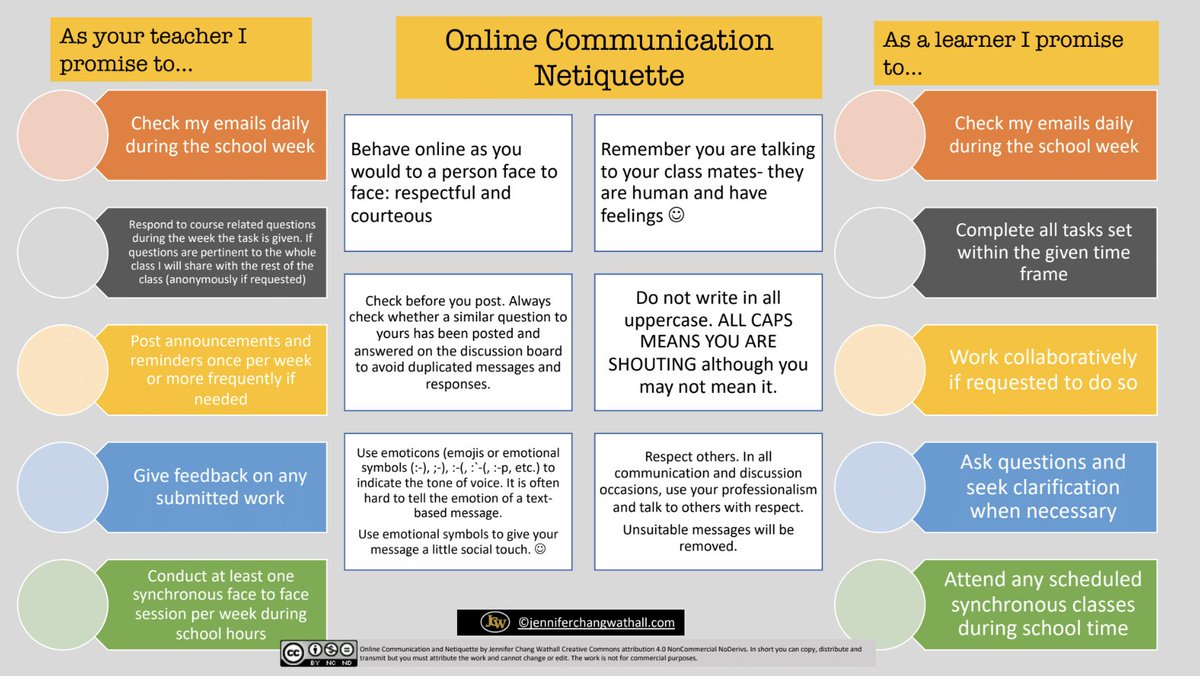
Communication came up a few times and specifically the challenge they were facing with email. This was something that I had not even thought about. Prior to COVID email was not a system we used across the school to routinely communicate with students. Our student email addresses are formatted with a string of numbers and at a domain that has been hard for students to remember. Students did use personal gmail or other domain specific addresses but we did not utilize our district addresses. Not having a centralized email system was one of the first things we realized we needed to use when we transitioned to distance learning. As we prepared to reopen in September virtually, we made sure that students were aware of their district emails and taught them how to find and sign into their accounts. And that's where we stopped. We assumed that accessing their email account was all that they needed to learn.
At the meeting, one student leader brought up the challenge of managing their email account. The student talked about the many notifications and assignments that they received from our learning management system as well as other platforms. As he was speaking I was thinking, we haven't introduced them at all to the tools that are available in their Outlook account to help them manage email and stay organized. (I know as an adult and experienced user of Outlook, I struggle to stay up to date and organized.) I explained that there was a way to set up rules in Outlook to filter emails into different folders as they arrived. Students' hands went up from across the meeting asking to be taught how to utilize this feature. I told them I would send out a screencast showing them how to create rules. Following the student meeting, I retold this story to a colleague. They looked at me and asked if I would send the screencast to them because they did not know how to create rules. Reminder, we don't know what we don't know.
While COVID has slowed learning in some ways, it has accelerated the learning in other areas that are not necessarily a part of the standards and course content. Many of these skills I am realizing we just assume students/adults know because they have had access to them on their device. I am going to continue to look for the nuggets of learning that are happening in spite of the pandemic.
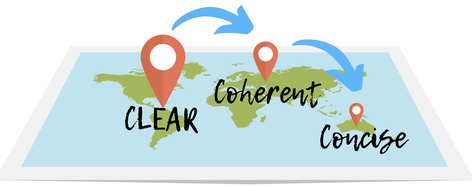
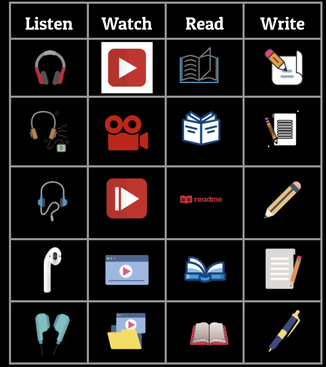
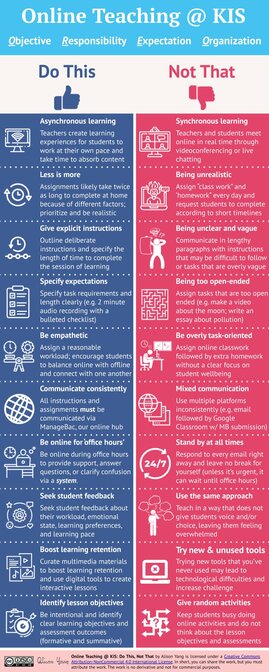
If you haven't met with your students or solicited feedback, I highly recommend it. This is one of a handful of things we learned from one brief meeting. In March we moved from face to face classroom experiences to emergency teaching. Teachers worked incredibly hard to move instruction from brick and mortar classrooms to a distance learning environment. As I visited classrooms virtually and looked at courses in our LMS, I became curious to learn more about what factors might contribute to a successful asynchronous learning experience. When it comes to asynchronous learning, there needs to be a shift in thinking about a student’s workload, there no longer is classwork vs. homework, there is only learning. Think holistically; how much total time do you have with students in a given week? How long will each task or experience take a student on average to complete? Rice University created a tool that can help teachers gauge the amount of time it may take students to complete assignments. Student agency gives students voice and often, choice, in how they learn. It is important because it gives students a stake in choosing from opportunities provided for them and triggers a greater investment of interest and motivation. The design of the learning experience must include clear goals that learners are working to demonstrate mastery in. If learners know what their goal is and trust that their teacher is going to allow them to move towards that goal while offering feedback, students are more invested in their own growth. Instead of having students download large files of text, consider creating playlists that include diverse content in a variety of formats. Include links to academic resources, news sources, popular culture, and other online resources. In Jennifer Gonzalez’s podcast “Self-Paced Learning: How One Teacher Does It”, she interviews Natalie McCutchen. In this episode McCutchen shares about how she converted her pre-algebra class to a completely self-paced system. Students worked on different skills at their own pace and moved through the curriculum as they showed mastery. I highly recommend listening to this episode as it provides some connections to asynchronous instruction. A second podcast of Gonzalez's to add to your list is "Are You a Curator or a Dumper?" This episode offers guidelines, strategies, and tools to assist with the curation of content. (Personally, I feel students need to be taught the skill of curation.) Asynchronous assignments by design must be clear, coherent, and concise in order to provide a smooth, navigable experience. You don’t want your students spending more time figuring out instructions than actually engaging in the work. When designing an asynchronous assignment, ask yourself the following question: "Am I reducing the cognitive load on my students?" Wayfinding is a new term for me. Wayfinding forces educators to step back and look at how students will move from point A to point B. Eric Hudson wrote "Hybrid Pedagogy". In it, Hudson does a nice job of explaining how important it is to design a learning experience that is easy for students to navigate. Take a minute and click over and read it, I promise you'll gain some insight. 8 tips to consider when designing asynchronous learning experiences:

These are a few of the key take aways that I have gathered as I have looked more closely at designing asynchronous learning experiences. The more I read and learn, the more I realize how much work it is to do it well. If you have additional ideas and resources, please share them below! As we move through our Covid 19 distance learning experience, my focus of inquiry has turned to what role instructional design and assessment play during distance learning. When you take away the carrot and the stick of earning a grade for engaging in learning, how do we motivate students to show up and engage in learning?
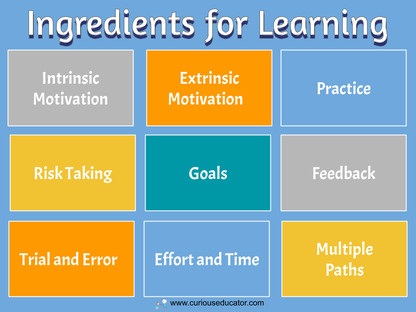
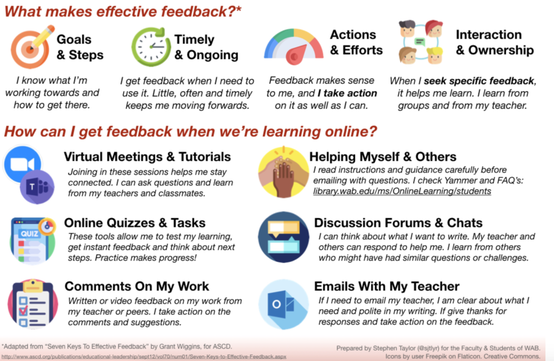
By making student learning our primary focus and helping students share that same focus, the learning experience moves from knowledge transmission to active learning. Teachers are the authors of their instructional design and should take into account the different ingredients when designing instructional experiences. Think about something that you are good at. More than likely, you were not always good at it. How did you get good at it? Look at the graphic below, were all or most of the elements below a part of your learning pathway to achieve the level of proficiency you now have now? How can teachers that relied heavily on the common lecture format find success during distance learning? They must ensure that success criteria is established for earning credit for a skill or learning target. The success criteria must be clear, rigorous, and attainable. When students are working online and submitting evidence of their learning, teachers must make sure that they are assigning things that they can give feedback to the student on. Feedback should be offered along the way to ALL students so that they know where they are in mastering the criteria. It will also be critical to have additional resources or paths available to students who don't "get it" when others are ready to move on. The graphic below designed by Stephen Taylor was adapted from Grant Wiggins work and touches on the different avenues effective feedback can take online. Feedback needs to be a conversation and not a statement. John Hattie and Helen Timperley found that effective feedback answers three major questions asked by a teacher and/or by a student: Where am I going? (What are the goals?), How am I doing? (What progress is being made toward the goal?), and Where to next? (What activities need to be undertaken to make better progress?) We must remember what the student does with the feedback is what matters. Learning should be assessed formatively using digital tools in small checks for understanding along the way. These are low or no stakes experiences or practice assessments that yield feedback to students. Check-out Retrieval Roulettes developed by Adam Boxer as a tool to use. The brain science behind retrieval practice is solid and this is an excellent tool to empower students. It allows them to spiral back through content knowledge.
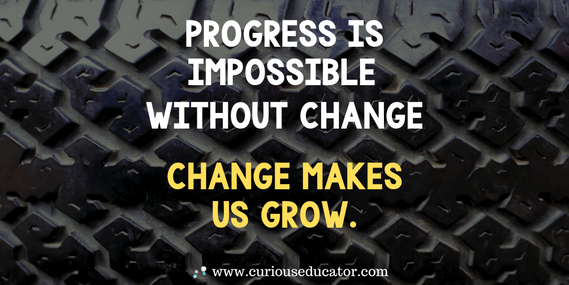
Generating opportunities for students to give you "summative output" can be done by student created products or student performance within an online testing environment. Check out 100 Things Students Can Create to Demonstrate What They Know or the website Exam.net. Exam.net is free to use right now if your school is outside Sweden. An additional resource for math teachers to look at is a post by Alice Keeler, From @mathdiana: Have Students Talk About Math. (I prefer to call it a task not a test” – @mathdiana) During these difficult times, we will learn new and better ways to guide students along a learning pathway than placing a number on a paper. I believe that growing and getting stronger in instructional design and assessment practices will transfer to improved learning experiences for students once we are back in our brick and mortar classrooms. And this goes without saying, but if you have a solid relationship formed with students this is all going to be a lot easier! If you have additional resources and ideas on instructional design, assessment and feedback practices, please share them! I know that I have only scratched the surface in my own learning. The last thing I feel like doing right now is being on the computer but I want to pause and reflect and gather some resources that I have learned from. As we finish our first week of distance learning, we have felt the weight of this quote, "Progress is impossible without change. Change Makes Us Grow." I purposefully chose the word weight, it's because the work has been heavy and the educators that I am surrounded by have worked hard, long hours. We have grown, not just a little but a LOT.... Key take aways from week one:
Asynchronous learning is different than synchronous learning. Creating a learning experience that students navigate independently takes time. Some of the resources and tips I have found to helpful are below.
And the last take away I'll share is this....extend grace and follow that with empathy and repeat. Everyone is doing the best that they can.
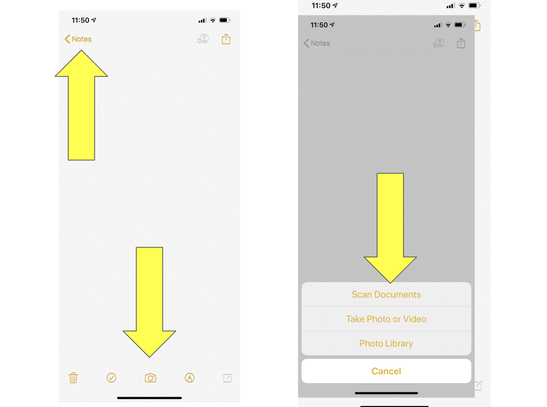
As we begin our transition to distance learning having students submit hand written or created material will be something we need to make simple. It's easy to snap a picture and send or upload, but now on the iPhone it's SO easy to actually scan it into a note and upload it directly to Google Classroom or Microsoft. The quality is much better than an actual photo too! In the past I have used the Office Lens app by Microsoft. It's a good alternative, but using the Notes scan feature is just faster. Check-out the short screencast below to see how it works. This is just one more tip that might help a student or teacher's workflow be more efficient!
|
Categories
All
Archives
October 2024
|


RSS Feed